

Insights
Parenting Tips, Info, & Advice

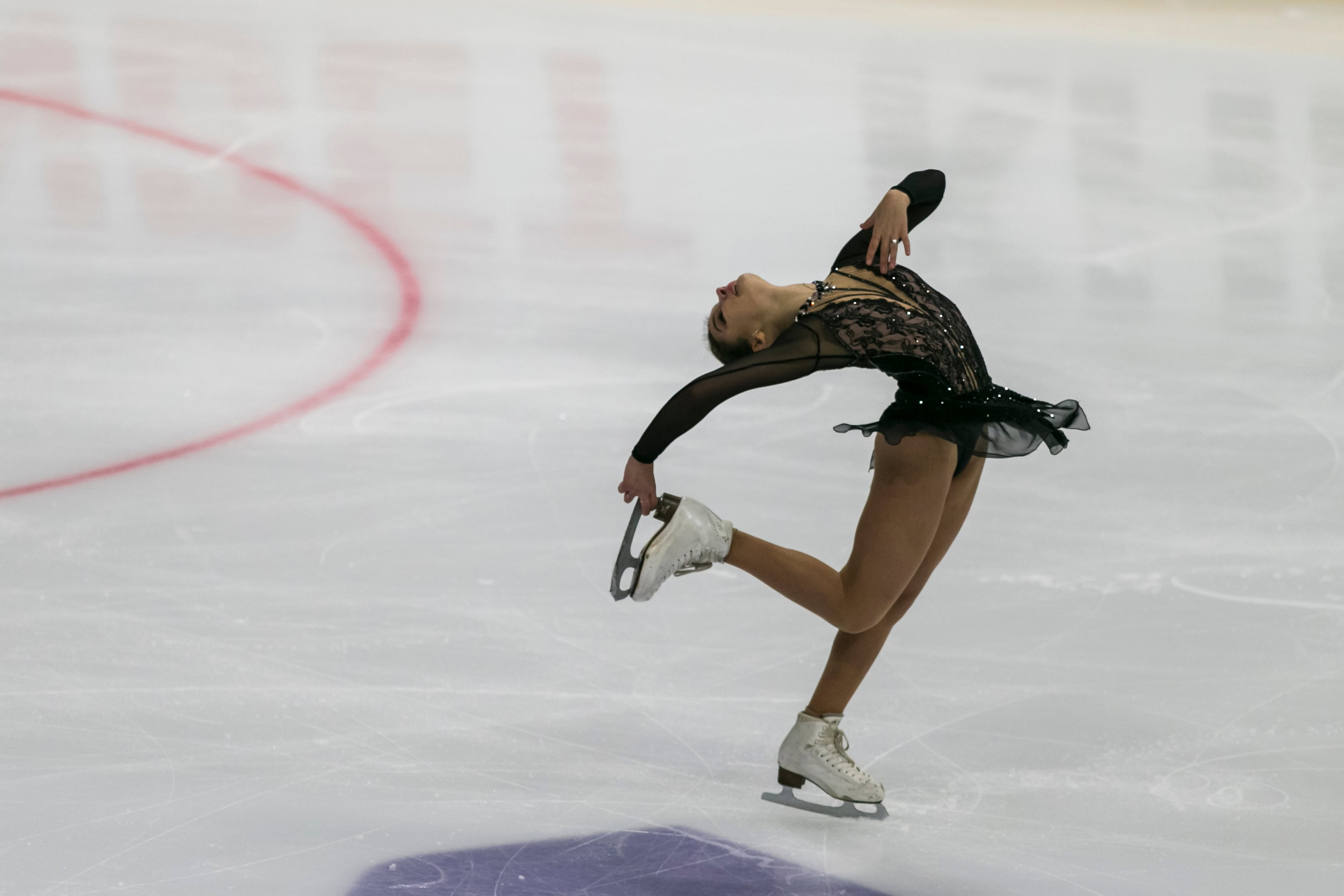
What Olympic Figure Skating Taught My Daughters (and Me) About Mistakes
My girls and I were curled up on the couch last week watching the women's figure skating free skate at the Milan Cortina Olympics. If you watched, you know it was one of those nights where the ice told a dozen stories at once.
But there was one moment that stopped our living room cold.
One of the skaters fell. And then she fell again. And then—heartbreakingly—she fell a third time. Three times in a single Olympic program, on the biggest stage of her life, with the entire world watching.
And every single time, she got back up.
She didn't stop. She didn't skate off the ice. She kept going. She finished her program. She fought for every remaining element, every spin, every step sequence. By the end, she wasn't skating for a medal. She was skating for herself.
I looked at my daughters and said, “You can learn more from watching her right now than from anyone who skated a perfect program.”
What the Crowd Did Next
Here's the part that really got me. As this young woman kept falling and kept getting up, the crowd didn't boo. They didn't go silent. They rallied. They cheered louder with every fall, not because the falls didn't matter, but because her courage did. They were telling her, with thousands of voices: We see you. We're with you. Keep going.
That is what community looks like. That is what support looks like. And honestly? That's what I want my kids to know about how the world should work—even if it doesn't always.
Because here's the thing: we live in a culture that loves to tear people down. Social media makes it easy. Commentary sections make it sport. But that night, inside that arena in Milan, a crowd full of strangers chose to lift someone up in her hardest moment. My daughters saw that. And I made sure they didn't miss it.
The Podium Was Beautiful, Too
The medal ceremony was its own kind of lesson. Alysa Liu—who won a historic gold for the United States after stepping away from skating for over two years because of burnout—was hugging everyone. Her competitors, her coaches, her teammates. Her teammate Amber Glenn, who had clawed her way back from 13th place to deliver the performance of her life, stood in ovation for Liu and raised her hand in celebration when her friend won gold. Glenn told Liu, “I'm so proud of you.”
Read that again. Her competitor told her she was proud of her.
The Japanese skaters on the podium were emotional and gracious. The retiring legend. The seventeen-year-old in her first Olympics. They embraced one another. They applauded one another's journeys. There was no tearing each other down. There was respect, admiration, and genuine joy for one another's achievements—even through their own disappointment.
What if we modeled that for our kids? What if, instead of comparison and competition being about winning over someone else, we taught our children that someone else's success doesn't diminish their own? That we can celebrate others and still be proud of ourselves?
What This Has to Do With Your Living Room
Okay, so maybe your kid isn't an Olympic figure skater. But I guarantee they're going to fall. They're going to bomb a test, miss a goal, forget their lines in the school play, say the wrong thing to a friend, or make a choice they regret. That's not a maybe. That's a certainty. Mistakes are a feature of childhood—and of being human—not a bug.
And in those moments, your child is going to look to you the same way that skater looked to the crowd. They're going to be searching your face, your tone, your body language for one thing: Am I still okay?
In Positive Discipline, we talk about mistakes being wonderful opportunities to learn. I know that might sound a little cheesy, but stay with me—because the alternative is what most of us grew up with, and it doesn't work. Most of us were raised in a culture of punishment and shame around mistakes. We learned to hide them, deny them, or feel crushed by them. And many of us are still carrying that into adulthood.
What if we gave our kids something different?
How to Talk About Mistakes (Without the Shame)
When your child makes a mistake, they don't need a lecture. They don't need “I told you so.” They don't need a long explanation of everything they did wrong—trust me, they already know. What they need first, before anything else, is to know that your love and your opinion of them hasn't changed.
Start with connection. “That was really hard. I'm here.” That's it. That's the whole first step. Just like the crowd that night—you're telling your child I see you, and I'm with you.
Normalize it. “Everyone makes mistakes. It's part of how we learn and grow.” This isn't about letting kids off the hook. It's about removing the shame so they can actually think. A child who is flooded with shame can't problem-solve. Their brain is in protection mode. You have to bring them back to safety first.
Get curious together. Once they're calm and connected, you can explore: “What happened? What did you learn? What might you do differently next time?” These aren't gotcha questions. They're genuine, curious, collaborative questions. You're not interrogating—you're thinking alongside them.
Celebrate the getting back up. That skater didn't win a medal. But she won something. She proved to herself—and to every kid watching—that falling doesn't mean it's over. Make sure your kids know you see their effort, their persistence, their courage. Not just their results.
You Don't Need the Olympics to Find These Moments
The Games are over now, but the lessons don't have to be. The Olympics handed us these moments on a silver (and gold and bronze) platter—but the truth is, these moments are everywhere if we're paying attention.
Your kid's school play, where someone forgets their lines and keeps going. The band concert where a musician cracks a note and plays on. The soccer game where your child misses the penalty kick. The science fair where the volcano doesn't erupt. The moments are smaller, the stakes are lower, but the lessons are exactly the same.
And here's the beautiful thing: your kids don't just have to watch bravery. They get to practice it. Every recital, every tryout, every presentation in front of the class is their own little arena. And you? You're their crowd. You get to be the one who cheers louder when they stumble, not quieter.
So the next time your family is at a concert, a game, a performance—look for the kid who falls and gets back up. Point them out. Talk about it on the way home. And when it's your kid up there, having a rough go of it, make sure they can find your face in the crowd. Make sure what they see there is exactly what that skater saw in Milan: I see you. I'm with you. Keep going.
And the next time the Olympics roll around? Watch them with your kids. Grab some popcorn. Curl up on the couch. Let your children see that the whole world falls down sometimes—and that getting back up is what makes it worth watching.
They're paying more attention than you think.
Filed under
Topics covered

Bark is phenomenal monitoring software that parents can use to connect to 30+ platforms to monitor text messages, emails, and social activity for signs of harmful interactions and content.
To get a one-week trial and 20% off for life, use code BNDN7PF.

Gabb allows parents to provide kids with a phone they can feel good about. Many parents feel pressured into a smartphone purchase for safety reasons or because their kids want to be able to talk to their friends.
Get more information and receive an automatic discount on your child’s Gabb phone!

This phenomenal program designed for middle and high school students contains over 40 lessons designed to help students from ALL backgrounds become college and career-ready.
Use code SAVE100 to get $100 off lifetime access!

Christy Keating is a certified parent coach, positive discipline educator, and motivational speaker. She is the founder and CEO of The Heartful Parent Collective, which includes Heartful Parent Coaching, Savvy Parents Safe Kids, and Heartful Parent Academy.
The mother of two amazing daughters, Christy strives to build a happier, healthier world - one child, one parent, and one family at a time.